Project - Shared tracking between the office and the workshop
The Excel workbook automated order preparation, but keeping information up to date became difficult once it reached the workshop. A custom ERP is now being tested to extend that tracking through to loading.
- Client
- Scierie de Graide
- Year
- Service
- Custom ERP, production tracking
Before the ERP, an Excel workbook centralised orders. Macros generated the sawing schedule and order sheet, which were then printed and handed directly to the workers. This system allowed the office to prepare production work efficiently.
Tracking that became difficult to share
Once distributed in the workshop, the sheets could no longer be updated together. As production progressed, teams noted changes in pencil and relayed updates by two-way radio. Getting an overview meant reconciling the annotations and checking information with the different workstations.
The process was proven, but maintaining a shared view required substantial daily coordination, handled almost full-time by one dedicated person. The challenge was therefore to extend the strengths of the existing system into the workshop while simplifying the flow of updates.
A shared view from the office to loading
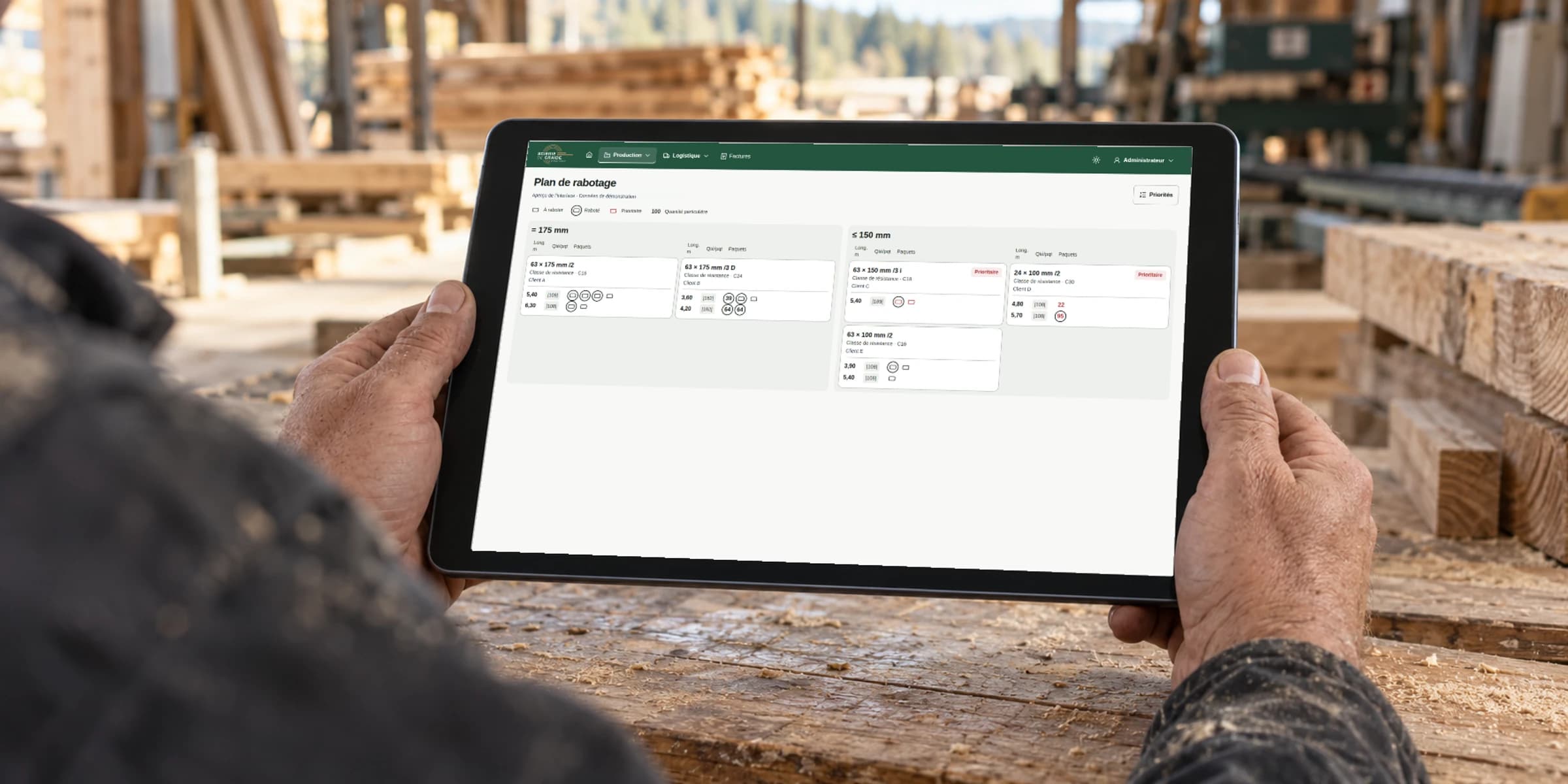
We designed an ERP around the actual journey of an order. Timber species, dimensions, available stock and required processing feed into the same tracking system, accessible from the office, workshop displays and forklift drivers’ tablets.
The administrative team has a shared view of orders, priorities and outstanding work. In the workshop, operators consult their schedule and scan bundles to confirm each step. Information is updated where the work happens, without waiting for a sheet to return or relaying every change by radio.
During loading, scanned bundles are used to prepare the delivery note and CE certificate. The same information then creates a draft invoice in Odoo, without re-entering everything from scratch.
A solution still being tested on site
The ERP is currently being tested at the sawmill. This phase will validate how it works at each workstation, including during network outages: operations are stored locally and synchronised when the connection returns.
The objective is clear: give everyone up-to-date information and reduce the time spent finding, checking and relaying it.