Project - Computer vision for equine imaging: an exploratory study
Delara Vision wanted to automate the analysis of horse X-rays. Sila carried out an exploratory study to validate computer vision techniques on real data, drawing on its academic background in machine learning.
- Client
- Delara Vision
- Year
- Service
- Computer vision, R&D
Delara Vision provides a complete management and monitoring tool for equine veterinarians. One of their daily tasks is analysing X-rays by eye.
The founder wanted to go further: add automated image analysis to support diagnosis. Before investing in full development, however, one question needed an answer: are current computer vision techniques suitable for equine imaging?
That is where our academic background came in.
A research problem, not just a coding problem
Analysing equine X-rays by computer is not simply a feature you add to an existing application. It is a research problem. No study documented anomaly detection on this type of imaging. The data was real but limited. And accuracy standards are high: a false negative can have consequences for animal health.
Before building a product, we needed to establish whether it was feasible and how reliable it could be.
This is exactly the kind of problem we spent several years working on in university machine learning research laboratories: analysing medical images, understanding subtle signals and designing robust detection methods with limited data.
What we did
1. Exploring available techniques
We studied several anomaly detection methods suited to small datasets, a common constraint in medical research. We selected the most promising ones and applied them to equine X-rays.
2. Validation on real data
This was not a demonstration using synthetic data. The methods were tested on Delara Vision’s actual proprietary X-rays, with a quantitative evaluation of their performance.
3. A visual assistant for veterinarians
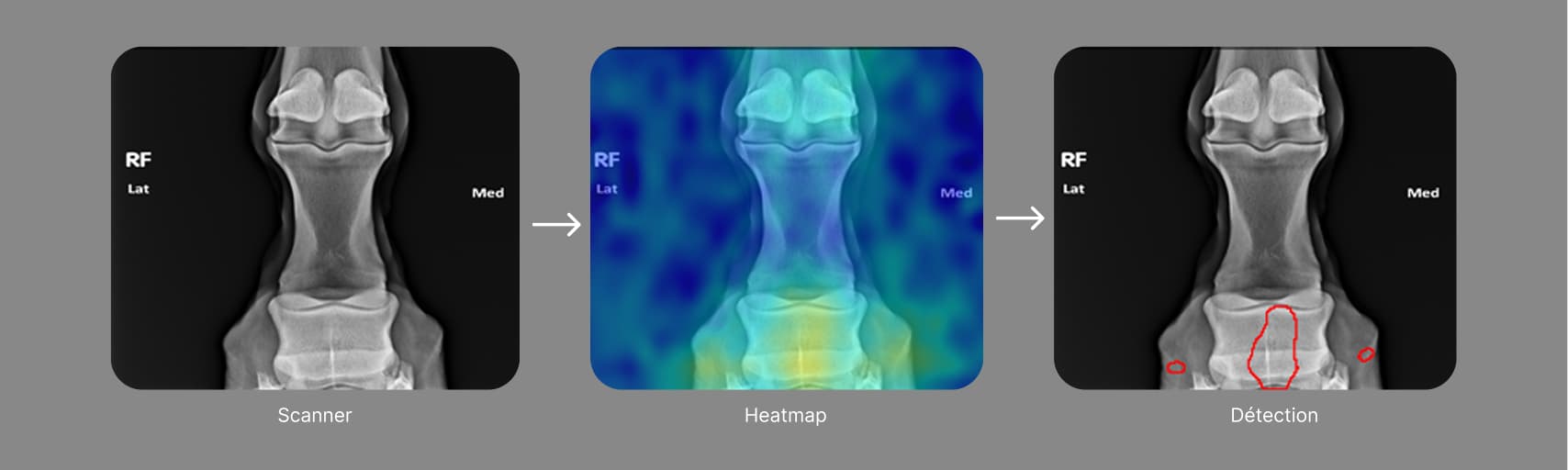
The system analyses an image and produces a heatmap highlighting suspicious areas. The veterinarian retains responsibility for the final diagnosis, with a systematic, data-based second look to support them.
What it demonstrates
For Delara Vision, this exploratory study validates a simple point: computer vision can be applied to equine imaging, with usable results today. That provides a basis for an informed investment decision about the next steps.
For us, the project also shows something else.
Sila builds more than interfaces. We have a solid research background. We know how to analyse medical images, work with scarce data and design detection methods — in other words, tackle problems that take more than well-written code.